The problem
Our team wanted to help people recognize distraction and return to a task without turning focus into punishment. The concept brought together supportive prompts, focus sessions, summaries, and restorative breaks.
My contribution
The team’s proposal credits me on the development side and as the presenter of the tool demonstration. We divided research, development, and presentation work across the team.
How we built it
We used Vercel v0 for rapid interface prototyping, ChatGPT and Claude in the development process, and Gamma for the presentation. It was a collaborative, AI-assisted hackathon project.
A useful change in direction
The team considered facial tracking, then moved toward browser behavior and positive reinforcement after feedback about privacy and false positives. That change is part of the project’s story: the way a tool offers help matters.
The result
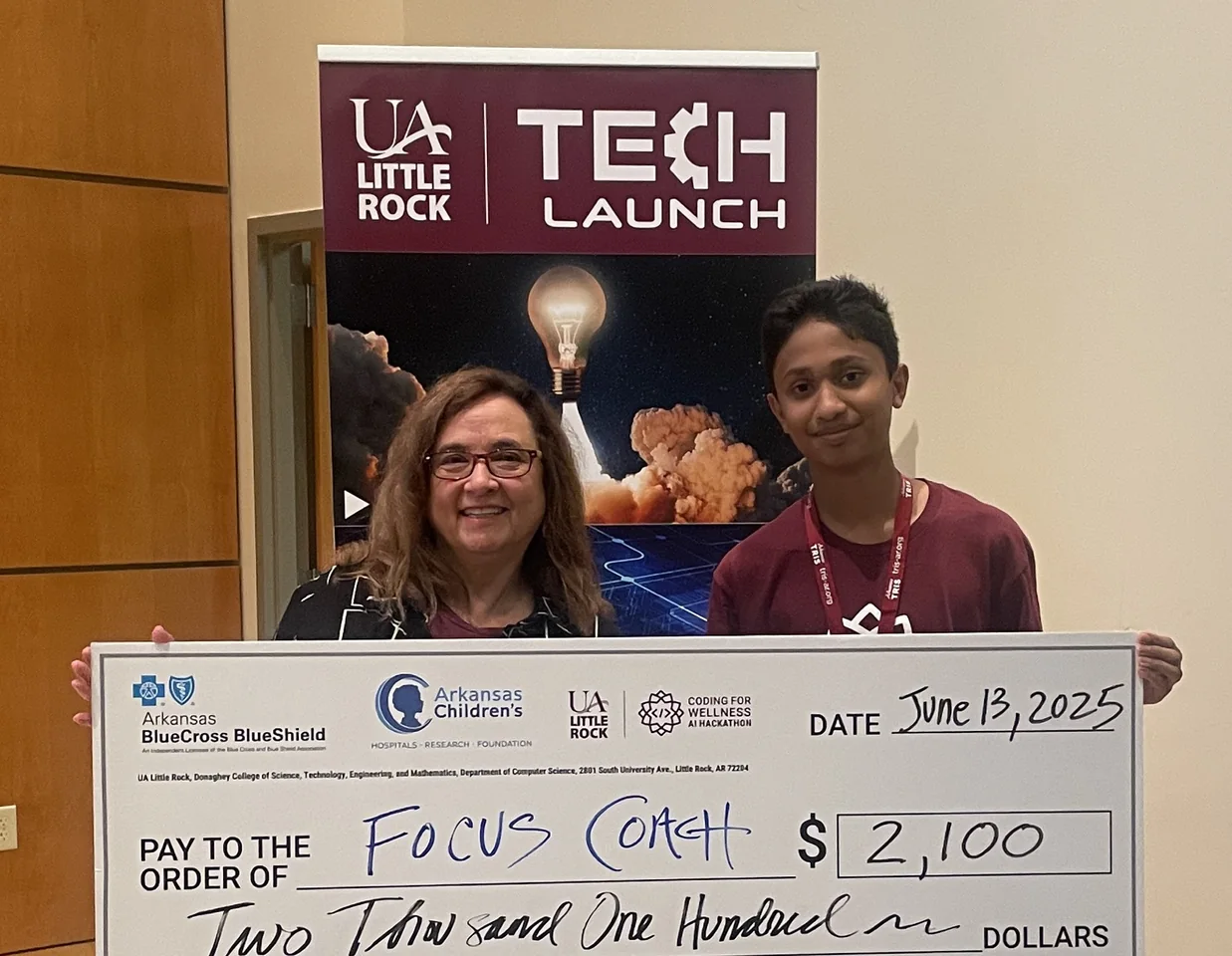
Focus Coach won UA Little Rock’s 2025 AI and Mental Health Hackathon and received a $2,100 team award. The university’s public report documents the winning project.
Where it stands
The live prototype is available and was reviewed on November 12, 2026. It includes task timers, focus feedback, a summary panel, wellness breaks, settings, and a leaderboard. The original source has not yet been added to the project repository, so its AI integrations and browser-wide blocking still need source review.